
Description
Is Australia a neo-feudal society?. Is inherited housing wealth dividing Australia into property-owning families and permanent renters? The evidence demands action.
For generations, Australians were told that hard work, education and responsible saving could provide a secure life. That promise was never equally available to everyone, but it carried enough truth to shape our national identity: Australia was supposed to be a country where opportunity depended more on what you did than on who your parents were.
Housing is now putting that promise in doubt.
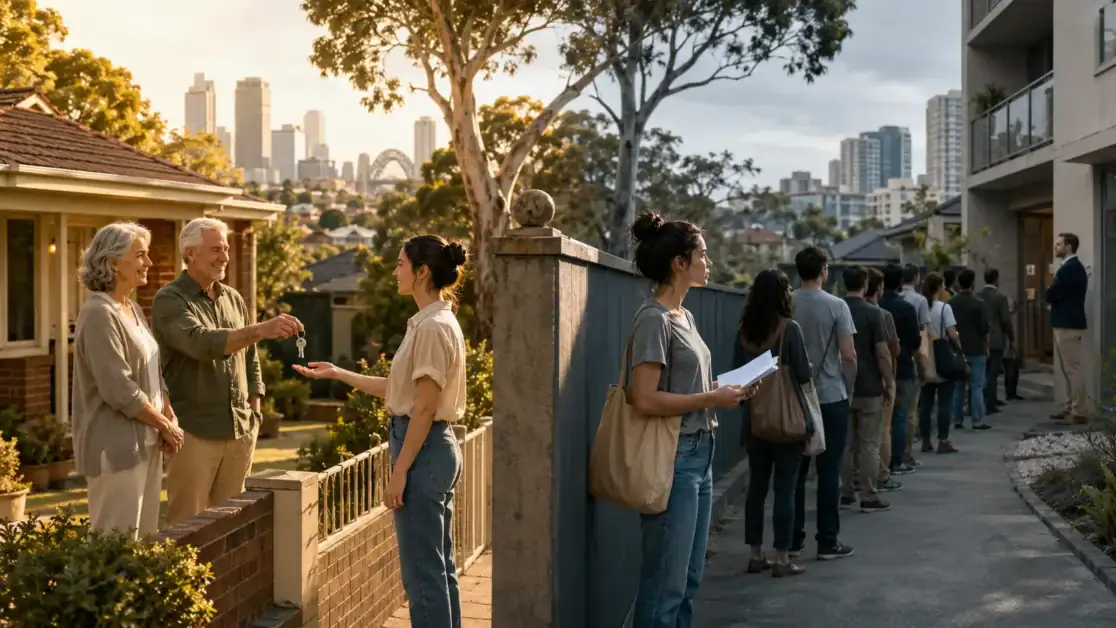
Two young adults can have similar abilities, qualifications and incomes, yet face radically different futures. One receives help with a deposit, lives rent-free with parents or has a family member guarantee a mortgage. The other rents privately, pays a large share of their income to a landlord and attempts to save while housing prices continue to rise.
The difference is not effort. It is inherited access to property wealth.
This does not mean Australia has literally returned to medieval feudalism. We remain a democracy with legal rights, public institutions and significant—although unequal—economic mobility. But the term neo-feudal society raises an important question: are we creating a modern hierarchy in which ownership of land is concentrated, renters transfer income to property owners, and family wealth increasingly determines who enjoys security and who remains dependent?
What Would “Neo-Feudal” Mean in Modern Australia?
Under historical feudalism, control of land was the foundation of wealth and power. Social position was largely inherited, while those without land worked under arrangements controlled by landowners.
Modern Australia is plainly different. Renters are not serfs, landlords are not feudal lords, and citizens can vote, change occupations and own property. The comparison should therefore be treated as a warning, not a literal description.
Nevertheless, several troubling similarities are emerging:
– Ownership of scarce land delivers large, often lightly taxed gains.
– People without property transfer a substantial part of their income to those who own it.
– Family background increasingly affects access to home ownership.
– Wealth can grow faster through owning assets than through working.
– Housing insecurity can limit where people live, work, study and raise children.
– Property owners have a strong political interest in policies that preserve high prices.
The danger is not that medieval institutions will return. It is that Australia could develop a durable property-owning class and a much less secure renting class, with membership increasingly passed from parents to children.
Housing Has Become Australia’s Great Dividing Line
Housing serves two purposes that are increasingly in conflict. It is a basic human need, but it is also Australia’s favoured store of private wealth.
The consequences are visible in the latest national figures. The National Housing Supply and Affordability Council reported that, by December 2025:
– The dwelling price-to-income ratio had reached a record 8.4.
– A median-income household required an estimated 11.2 years to save a 20 per cent deposit.
– A new lease on a median-priced rental consumed 33.1 per cent of median household income.
– Only 15 per cent of homes sold in 2024–25 were affordable to a median-income household under the Council’s measure.
– A household at the 30th income percentile could afford only 3 per cent of homes sold.
Home ownership among households aged 25–34 fell from 61 per cent in 1981 to 43 per cent in 2021. Among lower-income renters, the proportion experiencing rental stress rose from 24.9 per cent in 2014 to a record 29.5 per cent in 2024. These are not signs of a few young people being impatient or careless. They reveal a structural breakdown in housing affordability. Source: National Housing Supply and Affordability Council, State of the Housing System 2026 (https://nhsac.gov.au/sites/nhsac.gov.au/files/2026-04/ar-state-housing-system-2026.pdf)
When prices become so detached from earnings, work alone becomes less capable of buying security. Existing property wealth—and access to somebody else’s—becomes increasingly important.
The Bank of Mum and Dad Is Replacing Equal Opportunity
Parental assistance is not limited to handing over a cheque. It can include:
– contributing to a deposit;
– guaranteeing a mortgage;
– allowing an adult child to live at home rent-free;
– providing below-market accommodation in a family-owned property;
– paying education or living expenses;
– offering financial advice and a safety net if difficulties arise.
None of this makes parents wrong for helping their children. Most parents naturally do what they can. The injustice lies in a housing system that makes such assistance increasingly necessary.
Research by the Australian Housing and Urban Research Institute found that access to family support was the single largest factor assisting entry into home ownership among the people studied. In Sydney, family support was essential in every case examined. The researchers concluded that parental housing wealth was becoming more important than income or saving habits in determining access to a deposit. AHURI, Pathways to Home Ownership in an Age of Uncertainty (https://www.ahuri.edu.au/sites/default/files/documents/2023-03/AHURI-Final-Report-395-Pathways-to-home-ownership-in-an-age-of-uncertainty_1.pdf)
This creates a compounding advantage. A person who buys earlier stops paying a private landlord, begins building equity and may benefit from rising land values. A renter without family assistance continues paying rent while trying to save a deposit against a moving target.
The first advantage can eventually become the deposit for the next generation. The disadvantage can also be inherited.
The Coming Inheritance Divide
The Productivity Commission estimates that approximately $3.5 trillion in assets could be transferred between Australian generations by 2050. Its research also found that inheritances account for about one-third of the persistence of wealth between parents and children. Productivity Commission, Fairly Equal? Economic Mobility in Australia (https://www.pc.gov.au/inquiries-and-research/fairly-equal-mobility/
There is an important qualification. The Commission found that inheritances have, to date, reduced some measures of relative wealth inequality. Although wealthier people generally receive larger inheritances, an inheritance can represent a larger percentage increase in the existing wealth of a less wealthy recipient. Inheritances and gifts are therefore not the sole cause of Australian inequality. Productivity Commission, Wealth Transfers and Their Economic Effects (https://www.pc.gov.au/inquiries-and-research/wealth-transfers/)
That finding should not be ignored—but neither should it end the discussion.
Aggregate inequality measures cannot fully show how the timing and form of family assistance shape opportunity. A deposit received at 30 may enable decades of housing gains. An inheritance received at 65 may arrive too late to help with education, family formation or first-home ownership. Some people will inherit expensive property, while others will inherit little or nothing—or may spend years caring for parents whose assets are consumed by aged care and medical needs.
The decisive divide may therefore be less about inheritance at death than access to family wealth throughout life.
When Wealth Matters More Than Work
Australia still has considerable income mobility. Productivity Commission research found that 67 per cent of Australians born from 1976 to 1982 earned more than their parents did at a comparable age. The amount a person’s parents earned is not an unavoidable destiny for most Australians.
But income and wealth are not the same thing.
The ABS reported that the highest wealth quintile owned 62.8 per cent of household wealth in 2019–20, while the lowest quintile owned only 0.7 per cent. In 2022–23, the Gini coefficient for household wealth was 0.606—far higher than the equivalent measure for disposable household income, at 0.307. Australian Bureau of Statistics, Income and Wealth Inequality (https://www.abs.gov.au/statistics/measuring-what-matters/measuring-what-matters-themes-and-indicators/prosperous/income-and-wealth-inequality)
This matters because a wage pays the bills once. An appreciating property can produce capital gains, rental income, collateral for further borrowing and an inheritance for children.
A society can retain reasonable income mobility while becoming increasingly divided by assets. People may earn more than their parents yet still be unable to buy the home their parents could afford on a lower income.
Housing Wealth Shapes Far More Than Housing
The consequences extend throughout life.
Education
Families with wealth can pay tuition, provide accommodation and reduce the need for students to work long hours. Others begin their careers with debt and no financial safety net.
Employment
People who cannot afford housing near major employment centres may accept long commutes, decline opportunities or remain in less suitable work. Expensive housing can prevent essential workers from living in the communities they serve.
Family life
Housing insecurity can delay partnerships, children and independence. Adults may remain with parents because private rents prevent them from saving—not because they lack ambition.
Enterprise
A homeowner may borrow against property or take a career risk knowing they have secure shelter. A renter facing frequent increases or possible eviction has less capacity to start a business, retrain or withstand a period without income.
Health and ageing
Housing security affects mental health, physical health and community connection. Retiring with a paid-off home is fundamentally different from entering retirement exposed to private rents. The 2026 housing report identifies lower-income retiree renters as increasingly vulnerable to rental stress and homelessness.
Housing wealth therefore determines not merely where a person sleeps, but the risks they can take and the choices they can make.
A Tax System That Rewards Property Ownership
Australia’s housing divide did not arise from one policy. It reflects decades of decisions involving land-use planning, credit, taxation, population growth, construction capacity and inadequate public investment.
Tax treatment is part of that system. Treasury estimates that rental deductions reduced tax liabilities by $29.2 billion in 2025–26. In 2022–23, 78 per cent of the tax reduction from rental deductions went to people with above-median taxable incomes, while 37 per cent went to the top income decile. People in the top 30 per cent received 71 per cent of the benefit associated with rental losses. Treasury also estimated the broader capital gains tax discount for individuals and trusts at $21.79 billion in 2025–26, although that figure covers assets beyond housing. Australian Treasury, 2025–26 Tax Expenditures and Insights Statement (https://treasury.gov.au/sites/default/files/2025-12/p2025-721342.pdf)
Rental expenses are genuine costs, and not every landlord is wealthy. Tax reform must be designed carefully, especially where changes could affect rents or new construction. But the distribution of these benefits demonstrates that housing policy cannot be described as a neutral contest between equal buyers. The tax system gives substantial assistance to people who already possess the income and finance needed to acquire investment property.
Meanwhile, first-home-buyer grants and guarantees can increase buyers’ purchasing power without creating enough additional homes. When supply cannot respond, part of the assistance may be absorbed into higher prices, benefiting existing owners.
Private Renting and the Modern Dependence on Landlords
Private landlords provide homes within the present system, and many behave responsibly. The problem is not the character of every landlord. It is the imbalance created when access to an essential need depends heavily on private investment decisions.
Renters can face repeated rent increases, restricted capacity to modify their homes and the possibility that a property will be sold. Moving imposes financial and emotional costs and can disrupt employment, schooling, health care and community relationships.
For higher-income households, renting may be a flexible choice. For many others, it is a condition from which they cannot escape.
That resembles neo-feudalism most closely: not because tenants lack legal rights, but because one group’s permanent need for shelter becomes another group’s asset, income stream and source of expanding wealth.
Who Is Most Likely to Be Left Behind?
The property divide does not affect everybody equally. Those at greatest risk include:
– young people whose parents rent or have limited assets;
– low-paid and insecure workers;
– single parents, most of whom are women;
– older people who do not own a home;
– people with disability;
– First Nations households;
– people leaving violence;
– migrants without established family wealth in Australia.
These disadvantages overlap. A person with a low income, caring responsibilities and no family property is competing in the same market as buyers who can draw upon two generations of accumulated housing gains.
Calling this a generational war, however, would be misleading. Many older Australians are renters, while many younger Australians will inherit substantial wealth. The central division is not simply young against old. It is between households with access to property wealth and those without it.
Social, Public and Cooperative Housing: What Is the Difference?
Any serious solution requires clear terminology.
Social housing is the umbrella term for rental housing that is funded or partly funded by government, owned or managed by government or a community organisation, and allocated to eligible households. It includes public housing, community housing and Indigenous housing programs. [Australian Institute of Health and Welfare, Social Housing Definition (https://meteor.aihw.gov.au/content/820013)
Public housing is one form of social housing. State or territory governments own or lease the dwellings, manage the tenancies and generally charge subsidised rent linked to household income. Residents are tenants rather than individual owners.
Community housing is generally managed by not-for-profit organisations. The property may be owned by government, the provider or another body.
Housing cooperatives place democratic control in the hands of residents. Members participate in managing the cooperative and usually elect its governing body. Depending on the model, the property may be owned by a cooperative provider or collectively by members. Some cooperatives form part of social housing; others operate independently. Cooperative housing is not simply a building with shared facilities—the defining feature is resident control. Business Council of Co-operatives and Mutuals, Housing (https://bccm.coop/about-co-ops-mutuals/cme-sectors/housing/)
Australia has allowed all these alternatives to remain too small. AIHW figures show that social housing fell from 4.8 per cent of Australian households in 2011 to 4.1 per cent in 2023. Public housing households declined from about 331,000 in 2008 to 286,000 in 2023, although community housing expanded over the same period. AIHW, Social Housing Households and Waiting Lists (https://www.aihw.gov.au/reports/housing-assistance/housing-assistance-in-australia-2024/contents/households-and-waiting-lists)
Is Australia Already a Neo-Feudal Society?
The honest answer is: not yet, and not completely—but the warning is justified.
Australia retains institutions that distinguish it profoundly from feudal societies: democratic elections, universal legal citizenship, public education, Medicare, income support, labour rights and the possibility of movement between social classes.
Nor does every piece of evidence point in one direction. Australia performs comparatively well on some measures of income mobility. Inheritances have not historically increased every measure of relative wealth inequality. Home ownership remains widespread across the total population, partly because many older households own their homes.
But those qualifications should not become excuses for complacency. The direction of change matters:
– younger home ownership has fallen;
– prices have separated dramatically from incomes;
– rental stress has risen;
– parental assistance increasingly determines market entry;
– wealth is far more concentrated than income;
– social housing has declined as a share of all households.
Australia is not a feudal society, but it is acquiring neo-feudal characteristics. If present trends continue, family property could become the unofficial admission ticket to security.
A Housing Reform Program for Equal Citizenship
Australia needs more than another temporary grant or slogan. It needs to treat housing as essential infrastructure and restore a genuine alternative to the private property ladder.
1. Build Public Housing at National Scale
The Australian Government should fund a permanent construction program, delivered with states, territories, councils and public building authorities. The objective should be to expand the total stock of public housing—not merely transfer existing dwellings between providers.
Homes should be well-designed, energy-efficient and located near transport, employment, health care and education. Public housing should not be treated as emergency accommodation of last resort. It should be a respected, secure and permanent tenure.
2. Expand Community and Cooperative Housing
Not every household wants conventional government-managed housing. Long-term funding, public land and low-cost finance could support not-for-profit community providers and resident-controlled cooperatives.
Cooperatives offer an especially valuable middle path. They can provide long-term security and democratic control without requiring each household to purchase an expensive property individually. Limited-equity models can permit residents to build some personal equity while preventing public assistance from being converted into speculative windfalls.
3. Reform Tax Preferences Gradually and Fairly
Negative gearing and capital gains concessions should be reviewed together, with changes phased in and protections for existing arrangements where necessary. Reform should favour investment that creates additional housing rather than competition for established homes.
Governments should also consider broader land-tax reform, taxes on vacant land and measures discouraging speculative withholding of usable property.
4. Stop Inflating Demand Without Increasing Supply
Buyer grants, deposit guarantees and superannuation withdrawals may help selected purchasers, but they can also increase bidding power. Assistance should be tied wherever possible to new supply, shared-equity homes, cost-price public developments or cooperative projects.
5. Give Renters Genuine Security
Australia needs stronger minimum property standards, effective enforcement, reasonable limits on rent increases and longer-term leases. Tenants should be able to make ordinary modifications and keep pets subject to sensible protections.
Renting should be a secure housing choice—not a permanent state of anxiety.
6. Consider the Intergenerational Effects of Taxation
Australia should be willing to debate taxes on extremely large inheritances, gifts or landholdings, with generous thresholds protecting ordinary family homes and small estates. The purpose would not be to punish parents or seize modest inheritances. It would be to prevent very large concentrations of unearned wealth from hardening into dynasties.
Any such reform must account for farms, family businesses, illiquid assets, carers and people with disability. But refusing even to discuss inherited wealth leaves labour taxed while large windfalls can pass between generations largely untouched.
7. Invest in the Capacity to Build
Money alone cannot construct a home. Australia needs skilled workers, serviced land, materials, planning capacity and infrastructure. Governments should expand free TAFE, apprenticeships, public construction capability and domestic production of essential building materials.
Australia Can Afford to Act
The Australian Government is the issuer of the Australian dollar. It does not face the same financial constraint as a household, state government or local council that must first obtain dollars before spending them.
That does not mean it can spend without limit. The genuine constraints are the availability of labour, land, machinery, materials and productive capacity. Spending beyond those real limits can create inflation.
The responsible question is therefore not simply, “Where will the money come from?” It is: How can Australia mobilise its real resources to build enough good homes without causing inflation?
A staged national program can expand construction capacity while adding supply. Public spending can train apprentices, support local manufacturing, prepare land and build homes directly. Tax reform can reduce speculative demand and help release resources for productive construction.
Australia’s monetary sovereignty gives the Commonwealth the capacity to lead. Political priorities and real resources—not a shortage of Australian dollars—determine whether it chooses to do so.
Housing Must Become a Home Again
A democratic society cannot promise equal opportunity while allowing a basic necessity to become the principal mechanism for transmitting privilege.
People should be able to work, study, raise families and retire securely even when their parents do not own property. Home ownership can remain an aspiration, but dignity and security must not depend upon winning the birth lottery.
Australia now faces a choice. We can preserve a system in which rising land values enrich existing owners and determine the prospects of their children. Or we can build a housing system based on need, contribution, security and equal citizenship.
If we fail, the question “Is Australia becoming a neo-feudal society?” may eventually answer itself.
Frequently Asked Questions
Is Australia literally a feudal society?
No. Australia is a constitutional democracy with legal equality, elections and public institutions. “Neo-feudal” is an analogy describing the growing influence of land ownership, rent extraction and inherited wealth over life opportunities.
Are inheritances the main cause of housing inequality?
No single factor is responsible. Housing supply, lending, taxation, planning, wages and public investment all matter. However, family gifts and housing wealth increasingly influence who can overcome the deposit barrier.
Is public housing the same as social housing?
Public housing is one form of social housing. Social housing also includes community-managed and Indigenous housing programs.
Do residents individually own cooperative housing?
Not necessarily. Structures vary. Residents may be tenant-members, own shares or hold limited equity, but the defining feature is democratic control by the cooperative’s members.
Would government housing construction cause inflation?
It could if spending exceeded the available supply of workers, land and materials. A staged program that trains workers and expands construction capacity can reduce this risk while increasing the nation’s real housing supply.
Join the Conversation
Should a person’s future depend more on their contribution to society—or on whether their parents bought property decades earlier?
If you found this article insightful, explore more about political reform and Australia’s monetary sovereignty on Social Justice Australia.
Please share this article with your community to help drive the conversation towards a more just and equal society.
Click our Reader Feedback menu and tell us how our content has inspired you. Submit your testimonial, and leave a comment below to help shape the conversation.
If you value independent, public-interest analysis, please consider supporting Social Justice Australia (https://socialjusticeaustralia.com.au/support-social-justice-australia/).