
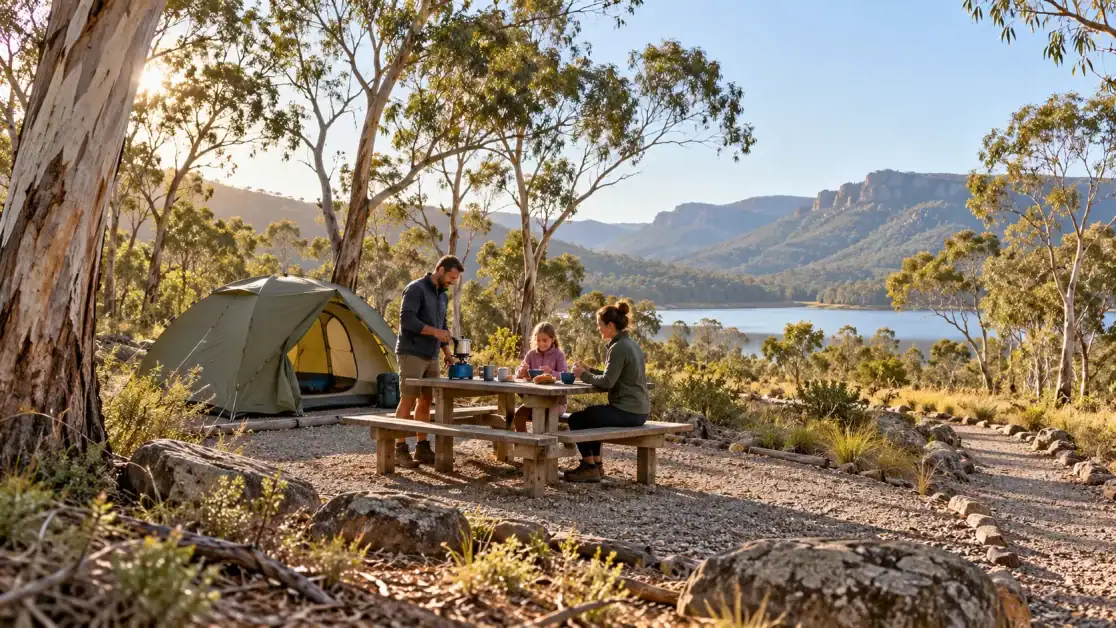
Description
Is free camping in Australia disappearing? Check NSW proposals, state fees and practical ways to protect affordable access to nature.
Free Camping in Australia and the Fight for Fair Access
Free camping in Australia remains available, but the cost and conditions of using public campgrounds deserve close attention. Families, pensioners and people on low incomes can be affected when prices rise or the cheapest sites lack the facilities they need.
The central question is how governments can protect nature, maintain safe facilities and keep camping within reach. Answering it requires separating proposed fees from actual charges, and public ownership from the commercial services sometimes offered within parks.
Quick Answer
Free camping is not ending across Australia. New South Wales’ (NSW) 2025 consultation proposed a mix of free basic sites and paid tiers, but the official update page reviewed on 26 October 2026 still describes proposed changes rather than confirming implementation. Victoria retains free options alongside discounted bookable campgrounds. Queensland charges for permits in its parks and forests. These different arrangements do not establish a nationwide disappearance of free campsites. Affordability nevertheless matters: a site can remain publicly managed while becoming too expensive for some visitors. Policy should protect practical low-cost access while funding conservation, maintenance and fair booking systems.
Sources: NSW consultation update, Parks Victoria camping information and Queensland camping fees.
Correction and update: An earlier version described proposed NSW charges as being rolled out and included an unverified Woody Head anecdote. Those statements have been removed. This version distinguishes proposals, current charges and newly announced services.
What NSW actually proposed
The 2025 NSW consultation paper proposed six campsite tiers, with fees linked to facilities and season. Its simplest tier would be free, with no booking fee or advance booking requirement. At the highest tier, with hot showers and on-site servicing, proposed charges were $54 in low season and $89 in high season, per campsite per night.
Seven nights at the proposed $89 rate would total $623 for the campsite alone. The proposal would also remove extra-person and booking fees, so the full booking price matters when comparing costs.
The official consultation update says submissions are being considered before next steps. Travellers should use their chosen campground’s live booking information for current prices.
How free camping in Australia varies between states
The national picture is uneven. The sources reviewed here do not provide a consistent count of free campsites lost across Australia. Looking at each state’s arrangements gives readers a clearer picture of what has changed and where affordable options remain.
Victoria retains free and discounted options
Parks Victoria lists both free and bookable camping options. Its May 2025 announcement confirmed that half-price camping fees would return from 1 July 2025 for two years, following the temporary free-camping period. The current camping page says the discount continues until July 2027.
The return of fees adds to visitors’ costs, even at half price. Free options and the continuing discount still give campers choices, depending on the location and facilities they need.
Queensland charges by person with a family rate
The Queensland camping fees page, checked on 26 October 2026, lists $7.75 per person per night or $31 per family. A family is one or two adults with accompanying children under 18, up to eight people in total. Children under five camp free.
At the listed family rate, seven nights cost $217 in camping fees. Travel, equipment and any separately required vehicle access permit add to the household’s holiday budget.
Why governments want to change booking systems
The NSW announcement launching the consultation describes a system intended to simplify bookings and link prices to facilities and seasonal demand.
The consultation identifies “ghost bookings”: sites reserved by people who do not arrive or who book more space than they need. This can leave apparently full campgrounds with unused places. The proposal includes more generous cancellation refunds to encourage people to release bookings.
Illness, bad weather and changed work arrangements can disrupt travel plans. A good booking system should make it easy for people to cancel promptly and release sites to others.
Higher prices might discourage speculative bookings, but they also raise costs for visitors who intend to come. Governments should compare pricing changes with other ways to reduce no-shows, measuring both site availability and affordability.
Does private equipment hire mean parks are being privatised
On 23 October 2026, NSW announced supported camping services, including caravan hire at 16 campgrounds and the return of tent hire at The Basin. The announcement says visitors book an existing campsite through the National Parks and Wildlife Service (NPWS) and pay an approved operator separately for equipment.
NSW says the caravan service uses existing caravan sites without reducing tent-site numbers. Tent-hire bookings were open at the announcement; caravan-hire bookings were scheduled to open in November 2026.
Equipment hire may help people who cannot store, tow or purchase camping equipment. Whether it improves affordability depends on the combined cost of hire and campsite fees. The announced service offers private equipment hire within NPWS-managed campgrounds.
SJA believes commercial services in public parks should operate under transparent conditions. Governments should explain how operators are selected, disclose any exclusive rights, and show how affordable choices for ordinary campers will be protected.
Affordability means more than the cheapest advertised site
A household that needs a nearby toilet, an accessible path or a site reachable without a four-wheel drive may gain little from free camping at a remote clearing. Affordable access requires a useful range of locations and facilities.
Low-season discounts also offer limited help to parents restricted to school holidays. Fees and concessions should take these practical limits into account.
The principles of equity and participation explored in SJA’s guide to social justice principles offer a useful test. Can people with different incomes and abilities use public facilities in practice? And can those affected influence decisions before they are settled?
Fair access and conservation belong together. Campground planning should respect cultural responsibilities, protect sensitive places and provide facilities that can be maintained over time.
Public funding has choices and real limits
Australia’s monetary sovereignty helps explain the funding choices available at the national level. The Australian dollar is issued through the national monetary system, with the Reserve Bank of Australia issuing banknotes. Australia has a floating exchange rate. State governments do not issue their own sovereign currency.
The Commonwealth’s financial position therefore differs from a household’s. Under current arrangements, spending still requires lawful authority and cash management: the Australian Office of Financial Management issues government bonds and manages financing obligations.
Funding can employ rangers and purchase materials, but it cannot instantly supply trained workers, suitable sites or extra environmental capacity. The RBA explains that demand exceeding sustainable supply can cause inflation. Spending plans must account for these constraints.
Greater Commonwealth support for state conservation and access projects could help fund ranger staffing, maintenance and affordable facilities. Clear funding agreements should set priorities, account for local capacity and measure results.
Five practical reforms worth testing
SJA recommends testing five reforms to improve access and maintain well-managed campgrounds.
- Protect a useful mix of free and low-cost sites. Include options with basic toilets and reasonable access where conservation conditions allow, rather than relying only on remote sites.
- Test targeted concessions. Reduced fees for people on low incomes may improve access, but eligibility checks should be simple, respectful and inexpensive to administer.
- Make cancellations easier. Trial reminders, clear cancellation processes and timely release of unused bookings before assuming higher fees are necessary. Measure whether the changes reduce no-shows.
- Publish access and maintenance results. Report site availability, fee revenue, servicing and participation where suitable privacy safeguards exist. Income alone is not an adequate measure of public benefit.
- Consult people who face barriers. Include Traditional Owners, disabled visitors, low-income families, conservation groups and local communities. Preserve non-digital booking assistance where practicable.
Concessions require administration, and facilities need staff and ongoing maintenance. Trials with published results would show which reforms improve access and where further funding or adjustments are needed.
What readers can do
Before travelling, check the park authority’s current campground page, total charges and access conditions. If you cannot use online booking, ask about alternatives: Queensland’s booking page lists over-the-counter options and telephone assistance.
When contacting an MP or parks agency, provide a specific example: the campground, dates, previous and current total price, and the facilities your household needs. Ask what affordable alternatives or concessions are available. Concrete examples help decision-makers understand who is missing out and why.
The choice is how to protect fair access
Free camping remains available, but access depends on location, facilities and household circumstances. Governments should protect affordable options while addressing the maintenance and booking problems that prevent people from using them.
SJA supports public investment that protects nature and keeps ordinary camping within reach. The test is whether people with different incomes and abilities can enjoy these places, and whether parks receive the resources needed to care for them.
Frequently Asked Questions
Are NSW’s proposed fees the prices I should budget for?
No. Use the current booking price for your chosen campground and dates. The statewide consultation schedule remains a proposal on the official update page reviewed for this article.
Does free camping mean I can camp anywhere?
No. A zero camping fee does not remove restrictions on location, fires, length of stay or closures. Check the relevant land manager’s rules before travelling.
Is a campsite fee the same as a park entry fee?
Not necessarily. Check whether camping, vehicle access, park entry or optional equipment hire are charged separately. Compare the total trip cost.
What should I do if an apparently empty campsite is booked?
Contact campground staff or the booking service. An empty site may have a valid reservation; do not assume it is available or occupy it without permission.
Would private tent hire automatically remove public camping?
No. Under the announced NSW service, visitors book NPWS campsites and hire equipment separately. Public access depends on the sites available, booking conditions and total cost.
Join the discussion
What combination of public funding, reasonable fees and booking rules would make camping fairer in your community? Share your experiences, evidence and views below. Respectful disagreement, alternative interpretations and corrections are welcome.
Explore related Social Justice Australia articles, share this article with your community, and consider raising specific access concerns through constructive public discussion or contact with your representatives.
If you believe in what we are trying to achieve, your support can help Social Justice Australia continue producing independent public-interest analysis. Every contribution, large or small, is appreciated. Visit Support Social Justice Australia if you would like to contribute.
Authoritative Sources
Sources checked on 26 October 2026. Where a page has no clear publication date, the access date is used. Live fees and booking conditions may change.
- NSW Department of Climate Change, Energy, the Environment and Water. Improving camping in New South Wales national parks: consultation paper. 2025, consultation 15 April–25 May.
- NSW Environment and Heritage. Improving camping in NSW national parks. page displays updated 15 April 2025; status checked 26 October 2026.
- NSW Environment and Heritage. Improving camping in NSW national parks. 15 April 2025.
- NSW Environment and Heritage. More ways to camp make exploring NSW national parks easier. 23 October 2026.
- Parks Victoria. Camping in Victoria. accessed 26 October 2026.
- Parks Victoria. Half-price camping is back for the next two years. 20 May 2025.
- Queensland Parks and Wildlife Service. Camping bookings and fees. accessed 26 October 2026.
- Reserve Bank of Australia. Reserve Bank of Australia. institutional role statement; accessed 26 October 2026.
- Reserve Bank of Australia. Exchange Rates and their Measurement. education explainer; accessed 26 October 2026.
- Australian Office of Financial Management. About. accessed 26 October 2026.
- Reserve Bank of Australia. Causes of Inflation. education explainer; accessed 26 October 2026.
Yes clearly yet another example of rich welfare corporate subsidies and tax exemptions to the tune of billions of dollars while the govt effectively steals the rights of citizens to enjoy their own country.
Well said, Ian — you’ve nailed the contradiction perfectly.
While everyday Australians face rising costs just to enjoy nature, corporations enjoy billions in subsidies, tax concessions, and favourable treatment — all funded by public money. It’s a clear case of welfare for the rich, austerity for the rest.
Access to our land is being commodified, while fossil fuel giants and developers get government handouts.
Citizens are being priced out of their own country, with camping fees, privatised services, and reduced public access.
Yet, Australia is a monetarily sovereign nation. Our federal government can afford to fully fund public services and support nature conservation — without squeezing ordinary people.
This isn’t about lack of money. It’s about political choices that favour corporate interests over citizens’ rights.