

Description
Australia will never run out of money. Discover how MMT busts deficit myths and why citizens must demand bold reform now.
🎧 Listen to this article:
Prefer to listen? Press play above or download the MP3.
Introduction
Australians are told repeatedly that the nation must “live within its means” and that government spending risks leaving “a mountain of debt” for future generations. But here is the truth: Australia will never run out of money.
Unlike a household or business, Australia is a currency issuer. It creates the Australian dollar. With this dollar sovereignty, the federal government can always fund public purpose programs – the only real limit is inflation and the availability of resources.
This article explains why Australia will never run out of money and how understanding this changes the way we see deficits.
📊 Statistic Box
- Australia’s federal budget deficit (2023–24): $47 billion
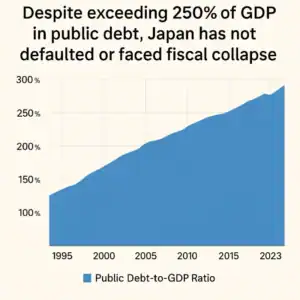
- Japan’s public debt-to-GDP: over 250%
- Despite its very high debt-to-GDP ratio, Japan has never defaulted or been unable to meet its obligations.
So why do politicians and media keep pushing myths about deficits?
The Problem: Why Australians Feel Stuck
Root Cause – The Deficit Fear Campaign
The fear of deficits has been carefully constructed. Politicians, backed by institutions like the IMF and reinforced by mainstream media, constantly compare government budgets to household finances. But a government that issues its own money is not like a family budget. Yet, Australia will never run out of money, so these comparisons are misleading.
This framing is designed to justify cuts to services, privatisation, and a shrinking of government responsibility. It distracts from the reality that the Commonwealth has the power to create the necessary funds for health, housing, and education.
As we argued in our article on why Australia will never run out of money, deficits are political myths: why a budget surplus is not a public good.
Reflective question: How many times have you heard that “there is no money” just before services were cut?
Power question: Who benefits when Australians accept this false comparison?
Consequence for Citizens – The Human Cost
The impact of deficit fear is very real. Austerity has meant fewer public houses, underfunded hospitals, and universities saddled with student debt. Ordinary Australians are told the nation “cannot afford” basics that secure dignity and fairness, but Australia will never run out of money – the real choice is how it is used.
During the pandemic, the government proved otherwise. The JobKeeper program showed that billions could be created almost overnight. But much of that money did not reach struggling households.
- A$27 billion in JobKeeper payments went to businesses that did not meet the turnover test, including many whose revenue actually rose.
- At least A$13.8 billion went to companies that grew their turnover while still receiving JobKeeper.
- In total, around A$38 billion of public money flowed to corporations that were not genuinely in crisis.
These billions could have been used to expand public housing, fix hospitals, or reduce student debt. Instead, they boosted corporate profits and shareholder dividends.
This reflects a more profound truth: much of Australia’s public money is used to support corporations rather than citizens. Subsidies, tax concessions, and programs like JobKeeper show how government spending often protects business balance sheets while leaving ordinary Australians to struggle.
According to the ABS, household debt now exceeds 180% of disposable income. Families carry the burden, while corporations receive billions in public money support.
Rally line: Public money should go to citizens, not to padding corporate profits.
The Impact: What Australians Are Experiencing
Everyday Effects – Cost of Living and Service Gaps
Australians feel the strain every day:
- Rising rents due to lack of public housing.
- Understaffed hospitals are causing delays in care.
- Universities are burdened with HECS debts, despite the reality that Australia will never run out of money.
- Job insecurity as secure public service jobs disappear.
This is where Modern Monetary Theory provides clarity. If the government exercised its sovereignty over the Australian dollar, it could guarantee jobs, build affordable housing, and fund healthcare properly.
See our companion article on the case for a job guarantee for practical steps forward.
Who Benefits from the Deficit Story
Cuts and privatisation open new markets for corporations. Energy companies, private health insurers, and property developers profit while citizens are told to tighten their belts.
The RBA and Treasury warn of “fiscal responsibility,” but this language masks the reality: the public purse is being redirected into private hands.
Rally line: Public money should serve public purpose – not private profit.
The Solution: What Must Be Done
Australia’s Monetary Sovereignty and Reform
Modern Monetary Theory makes it clear that Australia will never run out of money. What matters is how spending is directed: toward full employment, green energy, housing, and public health.
Australia dollar sovereignty is a tool for justice. Instead of using it, leaders pretend we are constrained like households. This myth is political, not economic.
Policy Solutions and Demands
Here is what a fair Australia can demand:
- Job Guarantee: A federal job program ensuring dignified work for all.
- Public Housing Expansion: Large-scale government-built homes with fair rents.
- Universal Services: Health, education, and transport are fully funded.
- Green Transition: Public investment in renewable energy and climate adaptation.
- Truthful Budgets: Stop treating deficits as dangerous and start focusing on outcomes.
Rally line: Imagine an Australia where no one fears poverty because our nation invests in its people.
Frequently Asked Questions
Q1: What does it mean that Australia will never run out of money?
It means the federal government, as the issuer of the Australian dollar, can always create the money needed for spending. The fundamental constraint is inflation, not insolvency.
Q2: What about inflation if the government spends too much?
Inflation occurs when spending exceeds the economy’s capacity. Smart policy, such as expanding supply, targeting unused resources, and implementing strategic taxation, helps keep inflation under control.
Q3: Does this mean deficits do not matter?
Deficits matter in terms of their outcomes. A deficit used to fund hospitals and jobs is beneficial. A deficit that fuels corporate subsidies is harmful.
Q4: How is this different from household debt?
Households use the currency, but the government issues it. If a household overspends, it risks bankruptcy. A currency-issuing government cannot go broke in its own currency.
Q5: Which other countries show this in practice?
Japan is the clearest example, with debt over 250% of GDP but no insolvency. The US and UK also operate with currency sovereignty.
Final Thoughts
The myth that Australia might “run out of money” has been one of the most damaging lies in modern politics. It has justified decades of cuts, privatisation, and inequality. But the truth is clear: Australia will never run out of money.
The only question is whether we use this power to serve all Australians or allow it to be captured by corporate interests.
We must stop believing in deficit myths and recognise that Australia will never run out of money – the real task is building a fair economy for all.
Rally line: As Australians, we can demand an economy built for fairness, dignity, and a fair go.
What’s Your Experience?
Have you ever been told that “there is no money” while watching essential services cut around you? How do you feel knowing that Australia will never run out of money? Share your thoughts below.
Call to Action
We’d Love to Hear from You!
Inspired by this article?
See what others are saying on our Reader Testimonials page.
Please share your thoughts via our Reader Feedback form. Your voice helps shape future content.
Scroll down and leave a comment below to join the discussion.
If this article resonated with you, explore more on political reform and Australia’s monetary sovereignty at Social Justice Australia.
Spread the word:
Please share this article with friends, family, or your social networks to keep the conversation going and help build a fairer, more just Australia.
Email this to 3 friends who care about social justice and a fair go for all citizens.
Keep Independent Journalism Alive. Support Voices That Challenge the Status Quo
We’re 100% reader-supported, no ads, no corporate strings, just honest, truth-driven journalism.
If our work informs or inspires you, please chip in.
Donate Now, one-time or monthly. Even $5 helps us keep publishing.
Together, we’re making change possible.
Already donated? Share the love by leaving us a quick review on Google to help others find us.
Reference
Unconventional monetary policy and debt sustainability in Japan
Australia will never run out of money
This info has been around for a good few years now and although many of us know about it, what can we do about it. It needs good government to acknowledge it and play it’s part. Gough Whitlam tried and was kicked out 😠
You’re right, Joy, the knowledge has been out there for years, but the challenge is getting governments to act on it. As you say, Whitlam tried to use public money for public purpose and paid a heavy political price. That history demonstrates how powerful interests push back when leaders prioritise citizens’ interests.
The good news is that awareness is growing. The more people understand that Australia will never run out of money, the harder it becomes for politicians to justify cuts and neglect. Change will come from citizens coming together to push for governments to use our dollar sovereignty responsibly, for housing, health, education, and a fair go.