
Description:
Explore the state of social justice in Australia, the challenges we face, and the solutions that can create a fairer future.
Introduction
The future of social justice in Australia depends on how we address inequality, improve access to public services, and ensure all citizens have a voice in government decisions.
Social justice in Australia is not just an ideal—it is a necessity for creating a society where everyone has equal access to resources, opportunities, and rights. However, the country faces deep-rooted challenges, particularly under neoliberal policies that have prioritised corporate interests over the public good.
The growing wealth inequality, Indigenous rights violations, and the erosion of public services all stand as significant barriers to achieving true social justice.
This comprehensive guide will explore what social justice means in Australia today, the impact of neoliberalism, and how citizens can work towards a more compassionate, fair, and ethical political system. Through restructuring public policies and using Australia’s monetary sovereignty, we can ensure that every citizen receives the support and opportunities they deserve.
⚠️The Problem – A Nation Built on Inequality
While Australia boasts one of the world’s most stable economies, its wealth is not evenly distributed. Neoliberal governments have spent decades dismantling public services, cutting taxes for corporations, and allowing housing, education, and healthcare to be treated as commodities rather than rights.
These policies have favoured donors and the wealthy elite, eroding the foundation of social justice in Australia. Indigenous Australians remain disproportionately affected by systemic disadvantage. Public money is often funnelled into subsidies for fossil fuels, tax breaks for the top end of town, and private consultants, while essential public programs are starved of funding.
💥Why It Hurts – The Consequences of Injustice
This systemic inequality isn’t just unfair—it’s devastating. More than 122,000 Australians are experiencing homelessness. Young people can’t afford to buy a home. Aged pensioners live in poverty. First Nations people are incarcerated at alarming rates, and regional Australians are being left behind as services centralise in major cities.
These aren’t isolated problems; they reflect the systemic failure of social justice in Australia.
Australians are increasingly disillusioned and disengaged, believing they have no power to change the system, while those in power continue to ignore the public’s demand for fairness.
💡The Solution – Using Our Dollar Sovereignty for Good
The good news? Australia has the capacity to fix all of this.
As a sovereign currency issuer, the Australian Government cannot run out of money. It creates the Australian dollar and can spend whatever is necessary to fund public services fully—*without borrowing or taxing first*. What matters is whether the real resources (workers, materials, infrastructure) exist.
Using our public money to fund social justice in Australia is not only economically possible—it is morally imperative.
By embracing this truth, we can:
– Guarantee public housing for all who need it
– Fully fund free, world-class public education and healthcare
– Eliminate poverty with a federal Job Guarantee
– Restore essential services to public ownership
– Invest in First Nations-led justice and self-determination
It’s not a matter of affordability—it’s a matter of political will.
What Social Justice Means in Australia Today
To fully understand social justice in Australia today, we must examine both its principles and how they are applied in practice.
Social justice refers to the fair distribution of wealth, opportunities, and privileges within a society. In Australia, this means ensuring that every individual, regardless of their socio-economic background, ethnicity, or location, has access to essential services such as healthcare, education, and housing. It also means protecting the rights of marginalised groups and addressing historical injustices.
Historical Overview
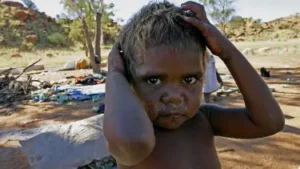 Historically, Australia has struggled with deep-seated inequality, particularly concerning its Indigenous population. While the post-war era saw significant strides towards equality, including the establishment of public healthcare and education systems, the rise of neoliberal policies in the late 20th century reversed many of these gains.
Today, social justice is still an ongoing battle, with Indigenous Australians still facing systemic disadvantages, and wealth inequality becoming more pronounced.
How Neoliberalism Undermined Social Justice
Neoliberalism, with its emphasis on free-market economics and reduced government intervention, has profoundly affected Australia’s social policies. Under neoliberal governments, public services have been privatised or scaled back, leading to a widening gap between the wealthy and the rest of the population. This shift has led to underfunded public services, reduced access to affordable housing, and an overall increase in wealth inequality.
This directly contradicts the goals of social justice in Australia.
What Is Neoliberalism?
 Neoliberalism is a political and economic philosophy that emphasises minimal government intervention in the market, deregulation, and privatisation of public assets. While proponents argue that it encourages economic growth and individual freedom, in practice, it has often led to increased inequality and reduced access to essential services for those who need them most.
Historical Impact in Australia
Neoliberalism took root in Australia during the 1980s, with both major political parties adopting policies that favoured market-based solutions to public issues. Key industries, such as telecommunications, energy, and transportation, were privatised. Public services like education and healthcare were defunded, and welfare programs were cut. As a result, those in lower-income brackets found it increasingly difficult to access the resources they needed to improve their socio-economic standing.
Effects on Public Services
Neoliberal policies have had a direct impact on the accessibility and quality of public services in Australia. Privatisation and funding cuts have eroded public institutions, making healthcare, education, and housing less affordable and accessible.
– The Dismantling of Public Education: The defunding of Technical and Further Education (TAFE) institutions and the rise of private educational providers have limited access to affordable, high-quality education.
– Housing Crisis: Neoliberal policies have worsened Australia’s housing affordability crisis, with an increasing reliance on private developers to meet public housing needs, which has failed to keep up with demand.
📉Wealth Inequality: The Barrier to a Fair Society
Current State of Wealth Inequality
Australia is experiencing an unprecedented level of wealth inequality. According to the Australian Bureau of Statistics, the wealthiest 20% of households now control more than 60% of the nation’s wealth, while the bottom 20% hold just 1%. This disparity has been further worsened by neoliberal policies that prioritise corporate profits over social welfare.
Corporate Interests vs. Public Needs
Corporations have an outsized influence on Australian politics, particularly through political donations and lobbying. This has led to policies that favour corporate tax cuts, deregulation, and privatisation, further enriching the wealthy while reducing public services for ordinary Australians.
Addressing the Gap
Addressing wealth inequality in Australia requires progressive taxation reforms if we are serious about achieving social justice in Australia, such as higher taxes on the wealthy and corporations, and increased investment in public services. By redistributing wealth more equitably, Australia can ensure that all citizens have access to the resources they need to thrive.
🖤Indigenous Justice and the Path to Reconciliation
Historical Injustices
For over 200 years, Indigenous Australians have faced systemic discrimination, dispossession of land, and cultural erasure. These injustices continue to affect Indigenous communities today, highlighting the urgent need for social justice in Australia that recognises and empowers First Nations voices, manifesting in lower life expectancy, higher incarceration rates, and limited access to quality education and healthcare.
Current Challenges
Indigenous Australians are overrepresented in the criminal justice system, accounting for 30% of the prison population despite making up only 3% of the total population. They also face significant health disparities, with life expectancy for Indigenous people being approximately 8 years shorter than for non-Indigenous Australians.
A Path Forward
Achieving social justice for Indigenous Australians requires not only addressing these disparities, but also recognising their sovereignty and right to self-determination.
– Closing the Gap Initiative: Launched in 2008, this program aims to reduce Indigenous disadvantage across a range of social and economic indicators. However, progress has been slow, and many targets are still unmet.
– The Uluru Statement from the Heart: This landmark 2017 statement calls for the establishment of a First Nations Voice to Parliament and the creation of a Makarrata Commission.
The Makarrata Commission
The commission’s goals include:
1. Truth-telling: Documenting and acknowledging the historical injustices suffered by Indigenous Australians, including land dispossession, violence, and systemic discrimination.
2. Agreement-making: Facilitating formal agreements, or treaties, between Indigenous groups and governments, ensuring Indigenous sovereignty is recognised and respected.
Makarrata—“coming together after a struggle”—symbolises reconciliation and justice.
🛠️Rebuilding Public Services for Equality
Healthcare for All
While Australia’s Medicare system provides universal healthcare, out-of-pocket costs for treatments and specialist services are still a barrier for many. Expanding Medicare to cover all essential health services, including dental and mental health, would help to reduce these disparities.
Education as a Right
Ensuring that every Australian has access to free, high-quality education is key to reducing inequality and promoting social mobility. This requires reinvesting in public schools and TAFEs and reversing the trend towards privatisation.
Public Housing Now
The government must commit to building sufficient public housing to meet the needs of all Australians. This would reduce homelessness and alleviate the financial burden on low-income families who are struggling to afford private rentals.
Corporate Power and Political Apathy: The Real Roadblocks
Political Influence of Corporations
Corporations wield considerable influence over Australian politics, often at the expense of ordinary citizens. Political donations and lobbying efforts by large corporations have resulted in policies that help the wealthy while neglecting the needs of the broader population.
Citizens’ Role in Change
Despite these challenges, Australians have the power to demand change. By engaging in grassroots activism, voting for candidates who prioritise social justice, and holding elected officials accountable, citizens can push for the policies that will create a fairer society.
What We Can Do Now: Policy and Grassroots Action
Policy Changes
-
Wealth Redistribution: Implementing progressive tax reforms, such as increasing taxes on the wealthy and large corporations, would generate the revenue needed to fund essential public services.
-
Public Accountability: Transparency measures, such as requiring political parties to show all donations and lobbying activities, would help to reduce corporate influence on policymaking.
Grassroots Movements
Community-driven movements have the potential to enact real change. By joining forces with like-minded individuals and organisations, Australians can advocate for policies that promote social justice and equality.
💬 Final Thoughts
Achieving social justice in Australia is a complex but necessary goal. By addressing wealth inequality, recognising Indigenous rights, and reforming public services, we can create a society where every individual can succeed. This requires bold political action, citizen engagement, and a commitment to fairness and equity. The solutions are within our reach, but they require us all to take part in making them a reality.
❓ Question for Readers
How do you think Australia can best address the systemic barriers to social justice?
FAQ
Q: What does social justice mean in Australia?
It means ensuring equality, protecting rights, and providing fair access to housing, health, education, and jobs.
📣 Call to Action
💬 We’d Love to Hear from You!
Inspired by this article?
✅ See what others are saying on our Reader Testimonials page.
✅ Share your thoughts via our Reader Feedback form — your voice helps shape future content.
✅ Scroll down and leave a comment below to join the discussion.
If this article resonated with you, explore more on political reform and Australia’s monetary sovereignty at Social Justice Australia.
📢 Spread the word:
Share this article with friends, family, or your social networks to keep the conversation going and help build a fairer, more just Australia.
⭐ Keep Independent Journalism Alive. Support Voices That Challenge the Status Quo
We’re 100% reader-supported — no ads, no corporate strings—just honest, truth-driven journalism.
💡 If our work informs or inspires you, please chip in.
💸 Donate Now — one-time or monthly
Even $5 helps us keep publishing.
🙌 Together, we’re making change possible.
💬 Already donated? Share the love — leave us a quick review on Google to help others find us.